The first few sentences of a conversation set the tone for everything that follows. If a conversation starts with hostility, it can be difficult to turn it around. I’m sure you’ve been in situations where something rubbed you the wrong way early on, and even after both sides exchanged words to smooth things over, a lingering frustration remained. Sometimes, the only way to reset the tone is to pause, regroup, and try again. This is why setting the stage for a difficult conversation properly is so important.
I’ve found that setting the right tone upfront is one of the most effective ways to keep difficult conversations productive. A technique I’ve used is to start by doing two things: letting the other person know we’re about to have a difficult conversation and stating my goal for the conversation.
This Might Be a Tough One
The first step in setting the stage for a difficult conversation is giving someone a heads-up. This prepares them mentally and often sets their expectations lower than reality. Most of the time, we don’t judge an experience by its objective qualities alone; we compare it to what we expected.
Imagine going to a high-end restaurant, anticipating an incredible meal, only to find the food is just okay. You’d probably leave disappointed. But if you had that same meal after a grueling three-day hiking trip? It would taste amazing.
The same principle applies to difficult conversations. When I say, “Hey, I need to have a difficult conversation with you,” the other person instinctively braces for something tense—likely worse than what’s coming. When the conversation turns out to be manageable, maybe even productive, it’s a pleasant surprise.
But naming the challenge isn’t enough. The next step is sharing your intention.
Here’s What I’m Hoping For
Setting expectations is one side of the equation. The other is clearly stating my goal for the conversation. No one’s goal in a difficult conversation is to make the other person miserable. We all want to feel understood and to find a way forward that works for both sides. By stating that objective upfront, I’ve noticed that people are more likely to approach the conversation as a collaboration rather than a battle.
For example, I might start a conversation by saying,
“Hey, I want to have a difficult conversation with you. I might mess up my words or phrase something poorly, but my goal here is to find a path forward that works for both of us.”
A simple statement like that does a few things. It acknowledges the difficulty of the conversation, which lowers defensiveness. It also frames it as something we’re working through together rather than something we’re on opposing sides of.
But even with a heads-up, it’s easy to get tangled in the next big question: how do I say this the right way?
It’s Not About Getting Every Word Right
When we’re bracing for a difficult conversation, it’s easy to obsess over the exact words, such as how to phrase things just right, how to avoid saying the wrong thing. But what I’ve learned is this: if you properly set the stage for a difficult conversation—by giving the other person a heads-up and naming your intention—you don’t need to nail every word.
That early framing creates a different kind of foundation. Instead of stepping into a battlefield, you’re stepping onto common ground. Without it, the conversation can feel like a minefield, where even a slightly off phrase gets interpreted in the worst possible light. Both sides become more focused on avoiding landmines than actually hearing each other.
But when the intention is clear from the start (such as, “This might be a tough conversation, and my goal is to figure out a way forward together”), it creates breathing room. Now, if I stumble over my words later, you’re less likely to take it as an attack. You’re more likely to hear the heart behind it.
When we’re feeling defensive, we zero in on flaws, look for cracks, and interpret ambiguity as threat. But when we’re in a more collaborative posture, even clumsy language can lead to curiosity instead of conflict. “Did you mean it that way?” replaces “How dare you say that.”
It doesn’t make the conversation easy. But it does make it possible.
Wrapping Up “Setting the Stage for Difficult Conversations”
In my experience, conversations that start this way—grounded in openness and intention—tend to be less confrontational and more focused on finding a way forward. When people feel like they’re being invited into a conversation rather than dragged into a fight, they show up differently. They listen differently. They collaborate.
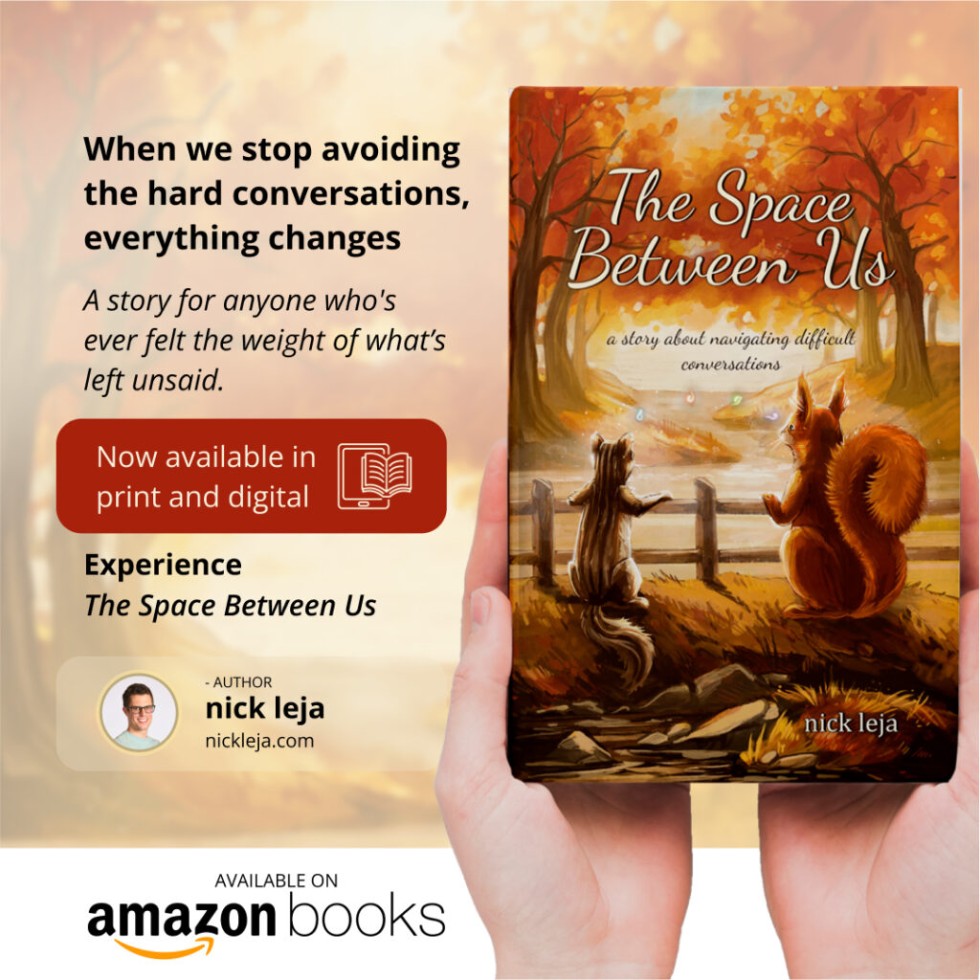
The Space Between Us
This post is adapted from my newest book, The Space Between Us, released on August 12. It’s all about the small choices that make hard conversations more human.
Feel free to click on the image below if you’d like to read more!
Want to Read More?
This post is part of an ongoing series on navigating difficult conversations:
- Setting the Stage for a Difficult Conversation
- How Sharing Perspectives Lowers Defensiveness in Difficult Conversations
- Interests vs. Positions: A Better Way to Handle Difficult Conversations
- How to Uncover Interests in a Difficult Conversation
- Sit on the Same Side of the Table: How to Reframe a Difficult Conversation
- How to Use “What If?” to Keep Difficult Conversations Collaborative